I have several vehicles to build in 1/72 and I would like to know if there is some generic colors to use for their camo. I am not looking for an absolute color reference, but for directions.
--> Schober armored train
--> Armored train PZ IV, V, VI
--> Artillery tractor Daimler M17 Zugwagen and its trailers.
--> Trucks like M9 Werkstattwagen, M9 Gun tractor ....
Although the colours used in the A-H navy is rather good documented the camouflage of the A-H army remains speculative. And I have seen no regulations up to this day.
To approach the colours used at that time as much as possible, I simply asked myself: What do we have as information? To my understandig, we must build on the following references:
-Early colour photography (if available).
-Artefacts, museum pieces in their original conditions
-Early paintings.
-Oral/written records.
All other so called «references» are more or less speculations or interpretations of black and white photos.
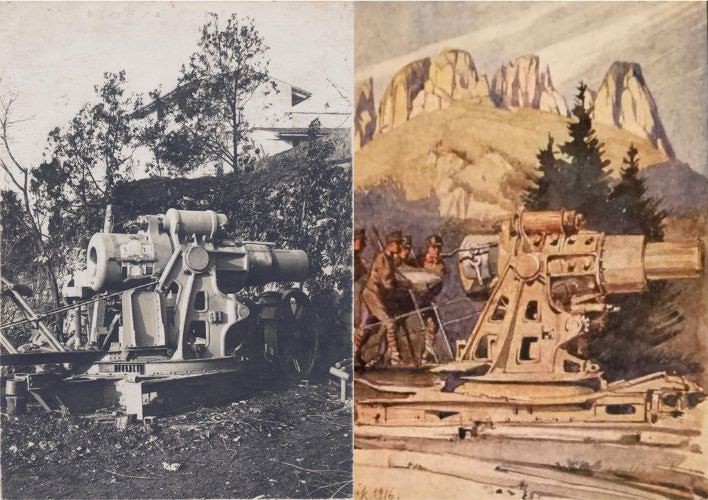
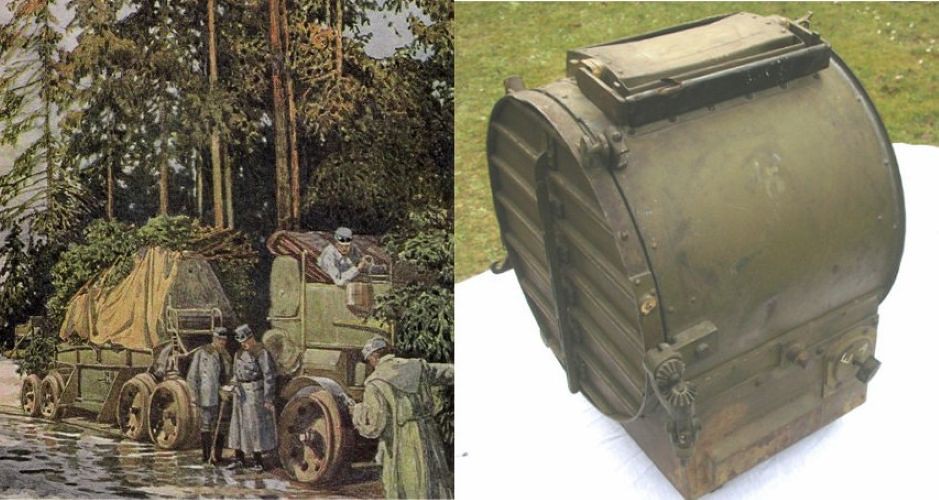
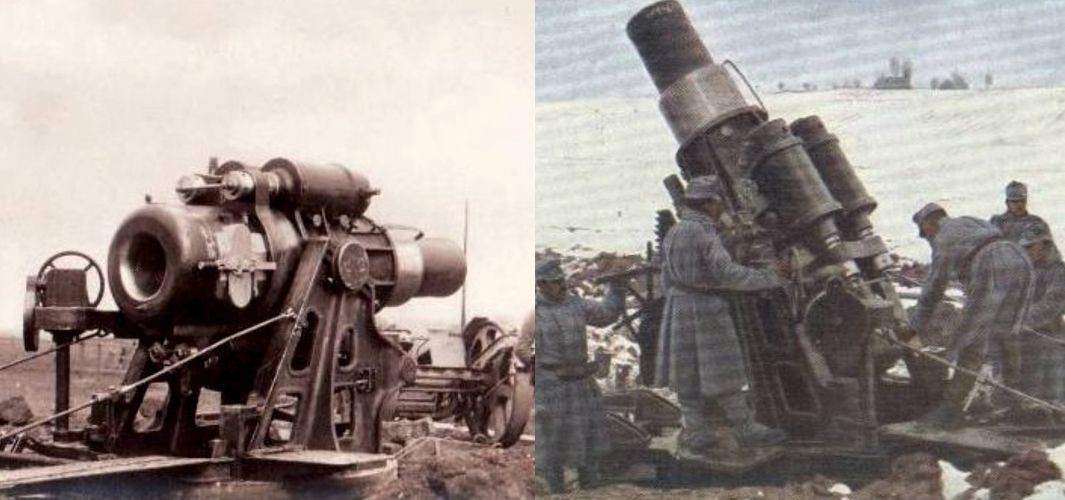
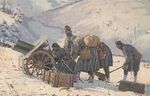
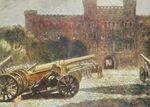
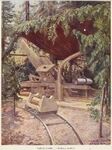
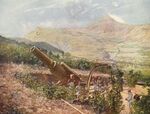
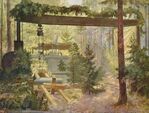
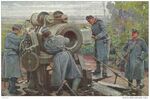
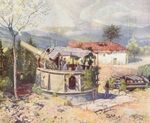
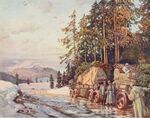
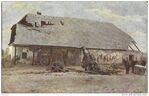
These three examples indicate how I interprete the A-H colour practice :
As you can make out, there was a wide range from a greenish sand colour to a rather dark green, at least on Artillery pieces.
__________________
"Siplicity is the ultimate sophistication" -Leonardo Da Vinci-
Were there differences between the 3 component elements of the Austro-Hungarian 'Army'? Reputedly the joint Imperial and Royal Army (Kaiserlich und Koniglich Armee) or Common Army (Gemeinsame Armee) was the worst-equipped because the national governments of Austria and Hungary preferred to fund their national armies, the Landwehr and Honved.
Was there much if any commonality between them in colours etc? It seems that the Honved only had field artillery whereas the Landwehr and KuK also had field howitzer batteries and the KuK had fortress artillery.
Greys of various shades were common artillery colours of the period. Dark greens were a problem in WW1 as yellow and green chromium pigments and Prussian Blue were hard to come by in quantity. Which is why the UK ended up with a muddy greenish brown and the USA with ochre.
Grey was easy. Just some Lamp Black - an industrial waste product, essentially soot - in the usual white lead base of paints of the era.
I would say that all 3 of the photos and the top right drawing show shades of grey. Very dark grey in the 2 lower photos. The searchlight (?) does appear to be a greenish shade, assuming it is original. But it is more in the vein of the British Service Colour, AKA Khaki, a brownish green or greenish brown.
I thought the US used a three colour scheme of mid-green, yellow (pale ochre) and white. in 1917-18 The colour blocks were bordered by black lines.
Olive-drab wasn't introduced until after the end of WW1.
Yellow pigments weren't stable in WW1 and often weren't the bright Yellows we are used to. Yellow wasn't widely used until Chrome Yellow was developed in the 1920s.
Charlie
-- Edited by CharlieC on Monday 18th of May 2026 06:11:53 AM
If we're talking tanks, US FTs came in French multi-colours. British Mk V and V* came in plain Service Colour.
I have seen an extract of a US Quartermaster Corps document from WW1 which talked of grey and the ochre-white mix. Of course I now can't find it.
Bulletin No. 90 of the General HQ of the American Expeditionary Force (AEF) established Olive Drab as the standard colour for tactical vehicles on 11th November 1918, literally on the day the war ended. That colour was described as a very muddy olive brown and was established by the Manual for the Quartermaster Corps, 1917, Par. 3964. The pigments were black and ochre. Presumably there was some crossover between its appearance in the 1917 manual and the general order which must have been at least 11 months later. The industrial specification 3-1 doesn't come long until 1920, and early attempt at codification.
The 3 and 5 colour schemes were not adopted for railway guns until 1920, if that may have application to other types of equipment. It mentions "the usual Olive Drab".
OD in some form was used since before WW1. It has been said, without evidence, that it was inspired by the colour of Pullman railroad cars. A collector who managed to get hold of a 1917 Ford T machine gun carrier still in original paint found a good match for FS 34087 Lusterless Khaki Olive Drab under the data plate.
US Signal Corps manuals from 1906 and 1917 say that all vehicles will be painted Olive Drab using this formula: 6 lbs white lead, 1 lb raw umber, 1 pt turpentine, 1 pt japan drier, 2 pts raw linseed oil.
To confuse the issue more, The Painter magazine in 1918 talks of 3 shades of olive drab - dark, medium and light.
Apologies for lack of relevance to Austro-Hungarian colours.......
Back to the original question: the colours of the A-H vehicles. I have often read about «shortage of certain colours» especially later in the war too. This shortage of material, as leather, fabrics, etc. is well ducumented especially for the the A-H army. But… paper is patient. When nop source is given, I strongly question every statement. Greys of various shades were common artillery colours of the period. I agree generally, but in the A-H army ???
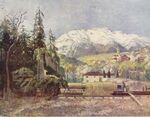
Here a collection of several contemporary paintings. Draw your own conclusions…
Grey was an easy colour in times of shortage. All paint of the day was based on White Lead with added pigment. Lamp Black - essentially soot - was a common industrial by-product with no real use until using it as a filler in rubber tyres was discovered. The arrival of black tyres rather than grey or white.
That being said, as warfare became more static camouflage became more important. Which is why we see grey being largely superseded as an equipment colour by the end of WW1.
Browns and greens in WW1 relied mostly on mineral pigments: ochres and umbers. I presume these were available with the borders of Austria-Hungary.